
Technology
Innovation for the Future of Energy
The “Vatican to Green” project would not be possible without the use of the most advanced technologies in the field of solar energy. The agrivoltaic plant at Santa Maria di Galeria will stand out for its use of innovative solutions developed to maximize energy efficiency and optimize the use of available natural resources.
The technology underpinning the plant includes bifacial photovoltaic panels, solar tracking systems (trackers), and state-of-the-art inverters, each of which will help make the plant a model of innovation and sustainability on a global scale.
132.000
tonnes/year of CO₂ emissions avoided
343
tonnes/year of NOₓ emissions avoided
2.194.000
Equivalent number of trees
Technology at the Service of Fratello Sole
01
Bifacial Photovoltaic Panels
Bifacial photovoltaic panels are one of the project’s key technological features.
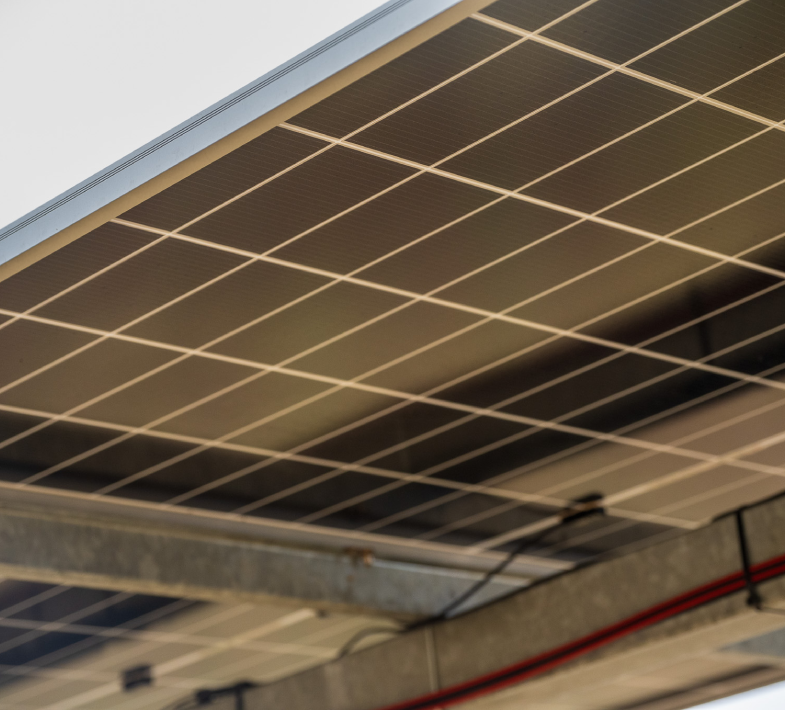
These panels are capable of capturing sunlight on both sides: the front surface, which receives direct sunlight, and the rear surface, which harnesses light reflected from the ground or surrounding structures.
This dual exposure increases the efficiency of the system, enabling energy production to rise by as much as 25% compared with conventional monofacial photovoltaic panels.
Moreover, these panels are particularly well suited to agricultural environments, as they allow crops to continue growing underneath them without being damaged or their growth being hindered.
02
Trackers: Following the Sun
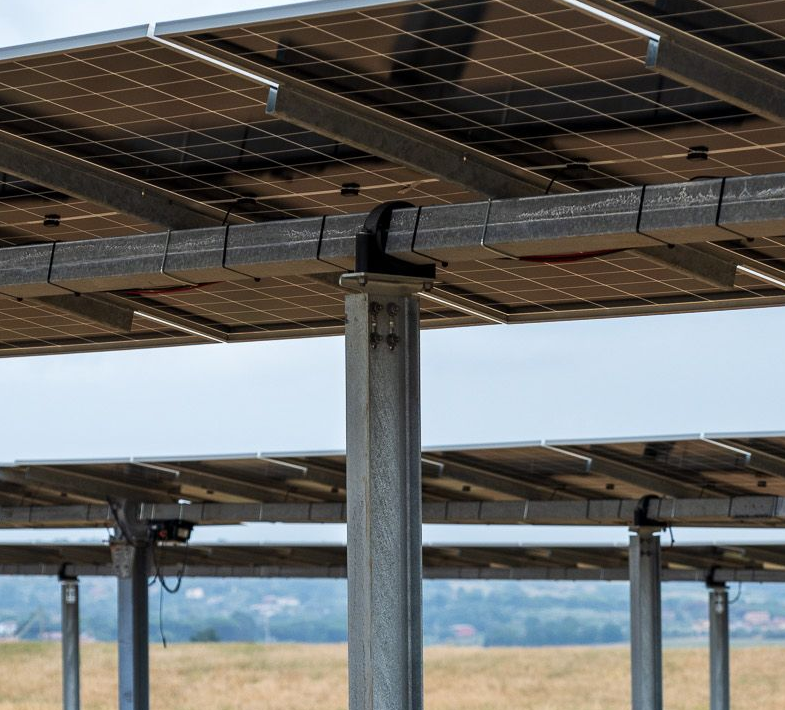
To further maximize energy production, the photovoltaic panels are mounted on trackers, namely single-axis solar tracking systems that automatically orient the modules to follow the movement of the sun throughout the day.
This tracking system enables the panels to maintain an optimal angle to the sun’s rays throughout the day, improving the efficiency of the photovoltaic system compared with fixed systems.
The trackers are designed to be lightweight and readily adaptable to different climatic and geographical conditions, minimizing energy losses caused by suboptimal panel orientation.
03
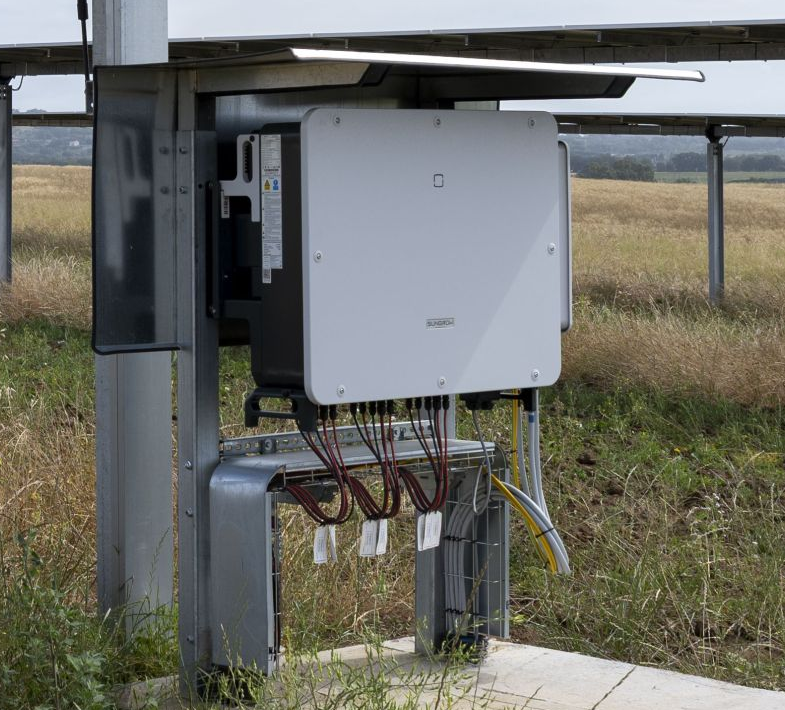
Inverters: Converting Energy
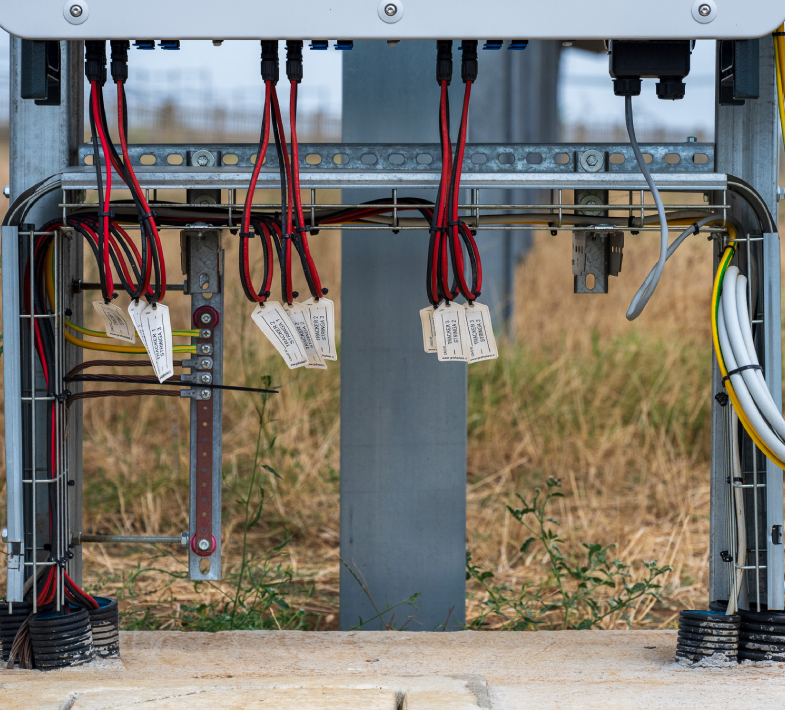
Once solar energy is captured by the panels, it is converted into direct current (DC), which is then transformed into alternating current (AC) by the inverters.
For the “Vatican to Green” project, the plant will use 18 inverter units, each with a power rating of 6,250 kVA.
The inverters ensure the efficient and reliable conversion of solar energy, allowing the electricity generated to be fed safely and steadily into the power grid.
Thanks to their advanced technology, these devices are capable of managing power fluctuations and ensuring continuous energy production even under variable solar irradiation conditions.
04
From the Plant to the Grid
Finally, the distribution system for the energy generated by the plant is designed to maximize efficiency and minimize losses.
The energy converted into alternating current will be transmitted through a system of underground cable ducts connecting the plant substation to the Vatican Radio Electrical Substation, where the electricity will be conditioned as necessary before being fed into the Italian national grid.
The transformation of the electricity at the switching substation will ensure its safe and reliable transmission.